Moduler Selene Sonobe from Maria Sinayskaya's "Zen Origami" book.


Moduler Selene Sonobe from Maria Sinayskaya's "Zen Origami" book.
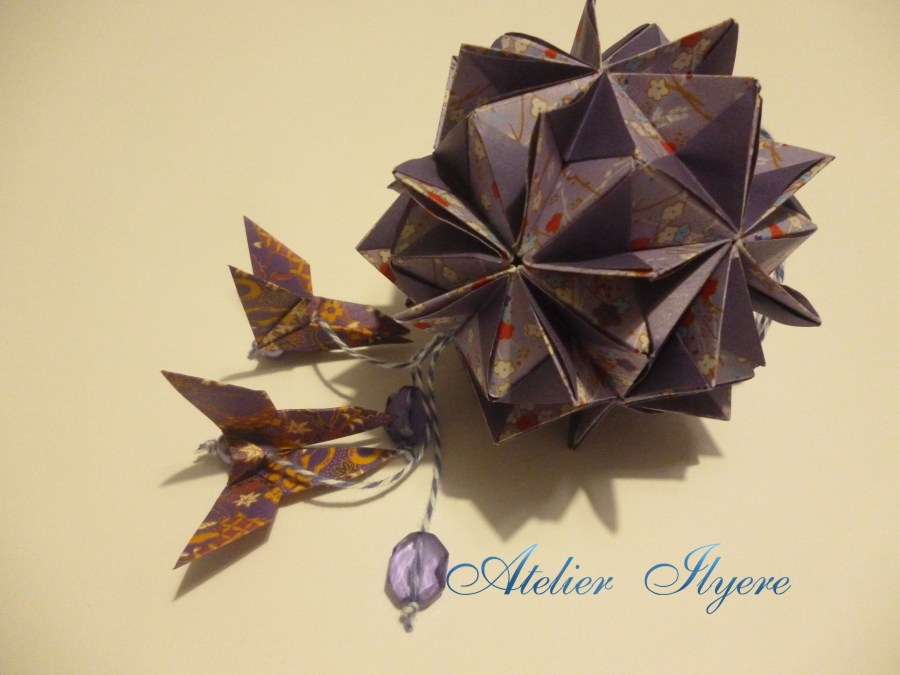
'Isolde Sonobe' by Maria Sinayskaya from the 'Zen Origami' book.

Kusudama "Nejire Shikaku Mado" from Tomoko Fuse's Kusudama Origami book.

Kusudama "Kirikomi Kiriko - Suisha" from Tomoko Fuse's Kusudama Origami book.
Remember the Mitsuya Kiriko? I noticed the other day that it was not secured well enough and the loop that held it started falling out of place. I thought I should remake the model again but more securely, until I noticed a similar design in my Kusudama Origami book. This one was called "Gaku Mitsuya" …

Kusudama "Hanahoshi Hakkaku Kiriko" from Tomoko Fuse's "Kusudama Origami" book.

Kusudama Hanahitai Mitsu from Tomoko Fuse's book.
I bought this book a year ago by Tomoko Fuse (布施 知子) called "Kusudama Origami - Hanakiriko" (くす玉おりがみ - 花切子). I can read what the Japanese says, but I don't know what it means! Fortunately, the book uses diagrams rather than explanations to construct models, hence why I bought it. Some of the models are pretty …
I'm part of a group on Facebook called "Origami Kids" (the group is open so anyone can view it) where people post their creations and/or tutorials on a regular basis. Quite a while ago, I came across a post about a rosebud and calyx tutorial (the tutorial creator and the person who designed the model can …
Kusudama (薬玉; lit. medicine ball) a paper model formed by sewing or gluing units together. Some origami artists dislike the use of papercutting and gluing, but I like them since they make lovely decorations. For 'true' modular origami, the artist Tomoko Fuse comes to mind. Kusudama balls (as they are commonly known as, even though the …


You must be logged in to post a comment.